Saturday, May 7, 2011

Kafana fana fo fana

Warning: picture-filled post! I went through all eight months of kafana pictures to form this post. I'm sorry to report that I wrote a very thorough post about kafanas and mistakenly deleted it without having a back-up so I will try to recreate it the best I can now.


Simply put, kafanas are Serbian restaurants. They resemble taverns with their intimate setting and heavy alcohol consumption and they are where you go for any celebration or sit-down meal in the Balkans. There's always some huge celebration, shady people doing business, spontaneous kolo dancing, live starogradska, muzika (old-town music), and loads and loads of undoubtedly delicious food.

The first kafana was opened during the 16th century in what is now Belgrade. Since then their popularity has grown through the Balkans and though there are variants between countries, but the food, music, and atmosphere are more or less the same.


Food in Serbia makes the mouth water and kafanas are no exception. As I mentioned in my post about food, it can be shared or ordered individually in kafanas. You can also ask the waiter to bring a selection of salads, breads, spreads, and meats and you leave it up to him -- I say him because I can't recall having a waitress in a kafana -- to provide an appropriate amount. Even if you order main meals separately there's always bread-breaking and spreads, soups, and salads to share and this keeps on throughout the meal and conversation so it's impossible for you to not feel like your table is a community of sorts.

As incredible as the food is, it takes second place to the atmosphere provided in kafanas.

Tamburaši are the merry men who play the starogradska muzika. They often go table to table taking requests and tips and typically they will play guitars, accordions, tambourines, and various wind and string instruments.


You will see everyone in a kafana mouthing the lyrics or singing along to their songs at some point which continuously fascinates me. Whether they like it or not, each generation has grown up knowing a few hundred of these songs which are played at every single celebration so much so that it becomes involuntary for them to sing and dance. I love how this music hasn't slipped through the cracks or been modified and is still just as present as it was when the older generations grew up.

To this music you dance kolo, a series of coordinated steps in a line or circle of people holding hands taking you forward and back, left and right. There are varieties of kolo but they are all fun to learn and dance and very similar so I've tried to pick up as many as I can through different celebrations.

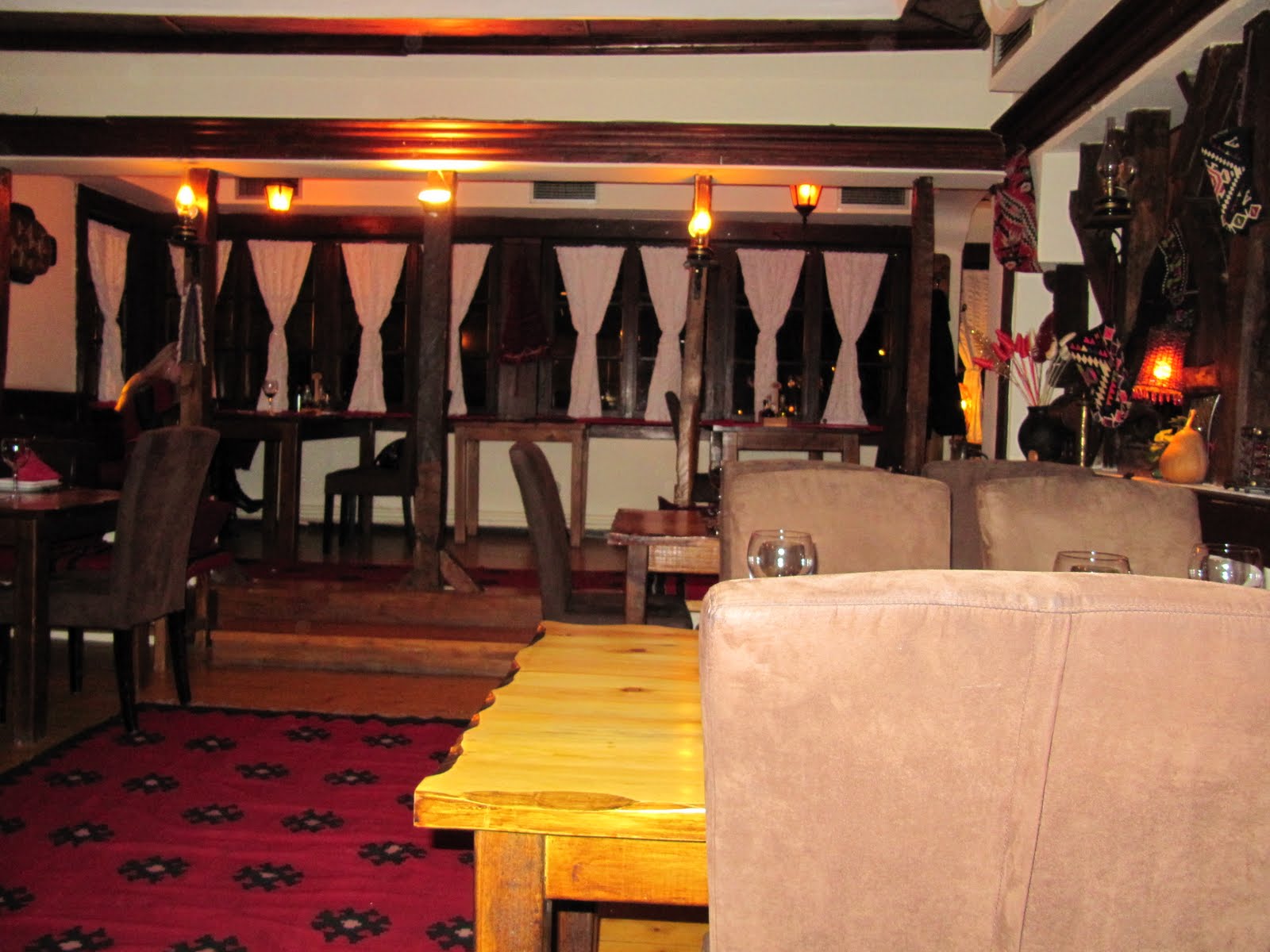
Though each kafana is unique both the exterior and the interior have remained true to tradition.

Exterior example, usually resembling a house or cabin


The interior of kafanas is like a museum. It showcases Serbia's history through pottery, clothing, cooking materials, embroidery, maps, pictures, paintings, etc.




Cyrillic alphabet decor


My host family went to this kafana known for its lamb for my host father's birthday. The thing is I already have a hard time eating meat because of what had to happen to it to get on my plate so this display of lambchop-reminders wasn't so helpful.


This was at the oldest kafana in Belgrade still around today: Znak Pitanja (question mark) kafana


We've been to three kafanas -- one in Nis, one in Belgrade, and one in Skopje, Macedonia -- that feature Tito, the renowned Yugoslav statesmen of the 20th century. These are filled with quotes, pictures, documents, and everything Tito. Sometimes the waiters dress up in the red, white, and blue garments Tito required of his Union of Pioneers.


Just in May I've been to three kafanas: for my host nephew's baptism celebration, for our group excursion, and for a goodbye sibling get-together. Three in a week is highly unusual but I'm glad I did because I got to have three fresh kafana memories before leaving Serbia. Here are some pictures from those events. That word choice brings up another aspect of kafanas: they are so much more than just food so each time you go to one it feels a lot more like an event than an meal.

This kafana or mehana -- an antiquated word for kafana -- was home to the five and a half hour celebration of my host nephew's baptism. Before this lunch/dinner/day spent in the kafana we went to a two hour ceremony at a church and then from 2pm to 7:30pm we ate, danced, sang, celebrated, and enjoyed the atmosphere.

Other than the tree growing through the room it looks like a normal dining hall, then comes the food, musicians, chaos, dancing... Why can't all dining rooms be that lively?


Often people will form an arc around the taburasi while dancing and singing merrily. Again I love how this has transcended generation barriers.


After a couple hours the tamburasi become old friends, warbling arm in arm. Often tips are introduced on the sweaty foreheads of the musicians. Just for reference, 1,000 dinar (the bill in the picture) is about $14. When we first came it was $12ish, the dollar seems to be on shakier grounds as of late.


Dancing kolo!


My host uncle conducting the tamburasi


Second kafana of the week: this is where we went for lunch at our Djavolja varos excursion. It was a one-family business, personal and wonderful.


Leading up to the kafana, it really was in a forrest. Kako lepo, how beautiful!


It was a beautiful day so we sat in the huts outside but this is the interior

Za tebe živim za tebe umreću = for you I live, for you I will die


Third kafana meal: these pictures are from the sibling goodbye dinner and it was in the same kafana as the baptism celebration.

The kafana's name in Cyrillic, it reads: Nišlijska Mehana, miris starog Niša = Niš mehana, the smell of old Niš


Do these guys look familiar? They were the same tamburasi as a few days prior and they recognized me! I suppose there aren't too many American kolo hounds passing through...


I'm already missing the kafana atmosphere but I'll have one more chance to soak it all in. Tomorrow during our looooong van ride to Montenegro we're stopping for a kafana lunch at an artificial village, Drvengrad, conceived by a famous Balkan film director so that will be our last Serbian kafana. (Side: the village was built completely traditionally as a set for a movie in which Johnny Depp starred and still today it functions as a village. It was the director's desire to keep it running in a way that sort of reminds me of Michael Jackson's Neverland fixation.) In Montenegro food will be delivered to the camp site, but in Croatia we'll experience the Croatian kafana.

I'll let you know how all of it goes in a couple weeks once internet access resumes!

Friday, May 6, 2011

Tomatoes: the produce of paradise

Croatian and Serbian are basically the same language. That's what everyone says. Serbo-Croatian was the Yugoslav standard language and since Yugoslavia broke up some differences have emerged, mainly just for Serbs and Croats to be able to separate themselves from the despised other.

One such word that is completely different is tomato! Paradajz in Serbian and rajčica in Croatian. However there is a connection, my Serbian teacher thinks, between these and that is paradise. Raj in Serbian and Croatian means paradise and čica or something similar is added to the end of a word to make it cuter or smaller. And paradajz phonetically resembles paradise so even though these words in their language bare no similarities, it seems possible that the origin is the same for both. And I love tomatoes so they are a produce of paradise in my opinion as well!

Food, Glorious Food

The Serbian cuisine, just like Serbian culture, implies not only region elements connected to Serbia, but other parts of former Yugoslavia as well. Great influences have been marked on the whole cooking process due to peasantry, which also influenced the folk craft, music and arts.

Under the rule of the Ottoman Empire, during the last five centuries, Serbia has had not only cultural influences, but cooking ones as well. Special traditional dishes made in Serbia today have common roots with the dishes prepared in Turkey. The whole Serbian cuisine is derived from a mixture of influences coming from Mediterranean, especially Greek influences, Hungary, Turkish and Austrian cuisines.


A list of traditional food and the best descriptions I could muster up:
Kačamak: made from corn flour, I was told it's like polenta if you know what that is, I didn't. It's a bland breakfast dish that people top with ketchup, cheese, meat, ground hot pepper (as in jalapeno, not the spice) etc.
Kačkavalj: white cheese from cows made and consumed in Southern Serbia, feta cheese is also really popular around the Balkans
Sarma: cabbage leaves stuffed with rice, spices, and minced beef
Punjena paprika: peppers stuffed with rice, spices, and minced beef
Podvarak: meat roasted in sauerkraut
Musaka: my favorite meat dish, minced beef mixed with eggs, onions, and spices, layered with sliced and seasoned potatoes, and baked. I just cooked this with my host mom today!
Gibanica: cheese/egg pastry
Proja: corn bread
Rakija: Serbian/Balkan brandy, plum, apple, apricot, quince, and grape are popular flavors
Prebranac: my favorite Serbian dish, spiced and seasoned baked beans, they sound plain but they're delicious. Plus their served in the pots shown in this post which I love.
Ajvar: a roasted red pepper and eggplant spread

Srpski roštilj ~ Serbian barbecue/grill

Serbians are very prideful of their grilled meats and for good reason.
Cevapčići: small rolls of mixed minced meat served with onions
Pljeskavica: a super popular dish, it's similar to a hamburger but it's grilled with spices and has a wider circumference than a hamburger, but it's just about 1/2 inch thick. At kafanas these are served plain traditionally, without a bun, but at street stands the bun envelopes the patty and you can top it with kajmak, ajvar, mayonnaise, onions, cucumbers, tomatoes, sour cream, or ketchup. Even I think pljeskavicas are really tasty, and I don't really care for hamburgers. The bun called lepinja is a Serbian flatbread. It's also wider than a hamburger bun to match the pljeskavica's shape and it's a lot more yummy than a typical bun. This flatbread is also what they serve at restaurants and when I first tried it it sort of reminded me of pita bread.
Pljeskavica man! This is my favorite pljeskavica place and I've gone there enough that he knows me and asked me to take a picture of him to "remember [he] makes the best pljeskavica in the world"

Pljeskavica shop


Karadjordje: named after the Serbian Prince Karadjordje, rolled pork or steak stuffed with cheese or kajmak, breaded and baked, served with roasted potatoes and tartar sauce
Mućkalica: a mix of various meats and vegetables, usually red peppers, eggplants, onions, tomatoes and veal or pork
Pečenje is the process of roasting meat by rotating it, this is how my host grandparents cook their meat in their village and how many restaurants cook meat

Typical breakfast: prženice is like french toast but it's not sweet. You scramble eggs, add milk, dip the bread in the mix, and fry the bread on the stove. Initially I was craving cinnamon and nutmeg and maple syrup but it's actually really tasty as a savory breakfast with ketchup, cheeses, peanut butter (from the Jif I was shipped, people here are repulsed by this divine spread)


Red peppers soaked in spices and oil, very customary


Fish in Serbia mostly come from the Dunav (Danube in English) river. This is a meal from Sokobanja where a platter of four fish was presented with potatoes, rice and mushrooms, and french fries were on the side. In the top left there's a cream colored spread resting on leaves. It's delicious and it's called kajmak.


The first half of the meal above consisted of salad, kajmak, and bread. Kajmak is perhaps the most unhealthy Serbian/Balkan food that I adore. It's what you get when you skim the top layer of simmered milk. It's essentially milk fat but it's oh so delicious. Warm bread with melted kajmak mmmmmm


This was a group meal at the Matka Canyon. Before we left to explore the canyon by boat and foot we asked the waiter if he could prepare something for the seven of us (5 group members, BY program director Ceca, and our Macedonian guide) and this is what he produced. Very delicious and impressive. We had two kilos of carp (the restaurant's speciality), tavce gravce (Macedonian prebranac/baked beans), assorted meats and salads, potatoes, fries, bread, ajvar, and seasoned mushrooms


Table at our favorite kafana in Belgrade


Typical serving bowls and put in center of table with help yourself and sharing attitude


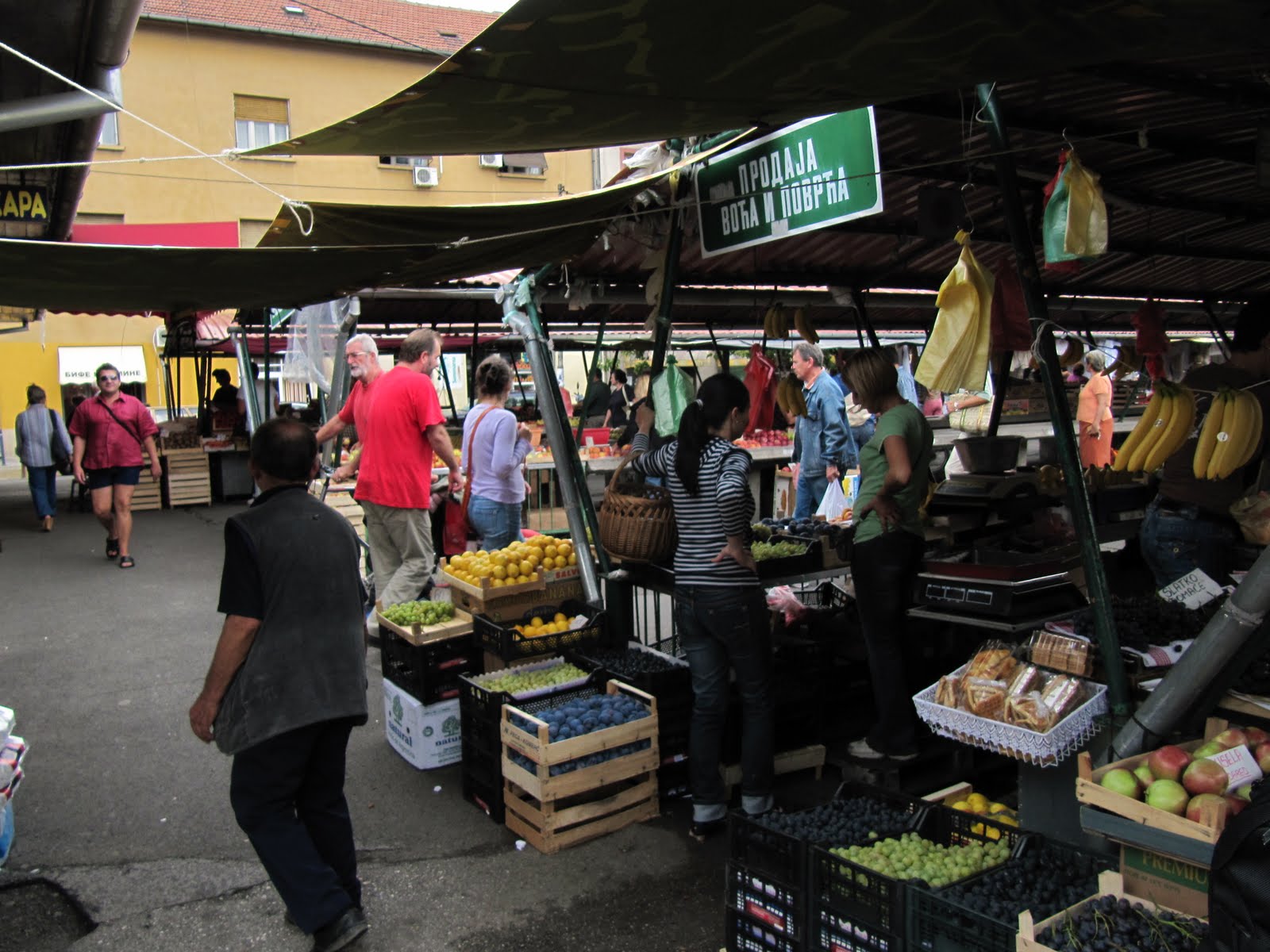
Farmer's market! I often come by here for fruits


Table view of the first meal in Serbia, meat, bread, typical salad with feta cheese, tomatoes, and sometimes cucumbers and onions

My first meal: breaded chicken stuffed with pepper and cheese and spices. I distinctly remember feeling really cold, jetlagged, and confused that first night so I wasn't exactly a fan of this first meal, but since I have grown oh so fond of Srpska kuhinja (Serbian food, literally Serbian kitchen).


Typical dinner with company. Andres' host mom in Nis prepared this for us, cucumber and mixed green salads, sarma to the left of the cucumbers: cabbage wrapped around a paste of ground meat, rice, and spices; punjena paprika: pepper stuffed with mince meat and cheese or veggies, bread of course, cheese with olives,


Spreads for bread. Pre-meal. Beans, pepper, vegetables, ajvar, kajmak


Salads can be shared or individually ordered, and they usually accompany the main meal or come just before, there's not a customary finish the salad then move to the entree


Slatko: a fruit preserve, more sweet and liquidy than jam. I've had strawberry, plum, blueberry, and cherry, It's traditional for honored guests to be greeted with a spoonful of slatko, literally meaning sweet.


Sveti Nikola meal, or half of it at least (only about 1/2 the food could fit on the table at once)


Orthodox Christmas bread with a cross and different shapes, a birds for peace, grapes for prosperity, and I can't quite make out the others


Koljivo made from wheat seeds, sugar, and walnuts, is served as you enter the host's house on their Slava or other special occasions. Each person gets a spoonful.


Christmas feast: only for 5 people, this was fancier and larger than usual but included regular items: turkish salad--peas, mayonnaise, beans, corn, carrot, kiseo kupus--sour cabbage salad, peppers cooked in oil and spices


Homemade pizzas, some things are universal. Perhaps these look usual but actually there's a layer of ham between a thin layer of tomato sauce and a layer of cheese. And this isn't how it's eaten either, people put ketchup or more tomato sauce on top before consumption.


This was food for six...

Full table view. It was my host sister's friend's birthday and we ordered a bunch and just shared it, choreographing the passing of trays as we went along. Usually at kafanas people order to share but often when it's just our group we order individually because we all have our favorites.


I know this is a long and perhaps tedious post but I did the best I could to give an all-around understanding of Srbska kuhinja ~ Serbian kitchen/cooking. The food is really yummy and it will be missed!

The cafe scene

Cafe culture is huge in Serbia. I've heard this is more or less a fact of Europe and people in Serbia definitely spend a lot of time cafe-ing it up. It's the understood way to meet friends or colleagues formally or informally. It's relaxing, comforting, and easy and I've taken quite a liking to it.

The polako mentality plays a large part in this casual and simple activity because living in the moment without being concerned with time is the backbone of cafes. You can rush in and out of the cafes or go there for practical hydrating reasons but this is hardly ever the case. People sit, talk, drink, smoke, reflect, observe passerbys, and take the day in at cafes and it's not unusual to spend an hour or three at a cafe having just coffee or tea the entire time.

This picture from Bečej doesn't show too much but this is a normal cafe set-up and I haven't taken many pictures in cafes


Skadarlija ulica: cafe upon kafana upon cafe


This is Nis' mini Skadarlija


There's also a nightlife cafe scene which usually starts around 9 or 10pm. Young people will meet up at a cafe, have a round of drinks, then move from cafe to club to cafe and sort of hop around until the wee hours of the morning.


A popular Serbian phrase is hayde na kafu, let's go for coffee, pronounced I day nah kah foo. People throw this phrase around all the time and I like how it sounds a lot so I've even begun using it.


We met for coffee to be interviewed for a radio station in Novi Sad. Many work meetings and discussions take place in cafes.


Fond memories with this picture. Asja and I stumbled into this cafe during second week in Nis. It tends to draw an older crowd, unbeknownst to us at that time, and we certainly didn't help our obvious outsider label by ordering chocolate milk.


Initially I had difficulty sitting for these extended periods but this relaxation has grown on me. The hot beverages are chiefly responsible for this I think because you are required to sit still and wait or risk a charred tongue. Then once my Serbian improved and I could follow and contribute to conversations, cafes became even more pleasurable meeting grounds.